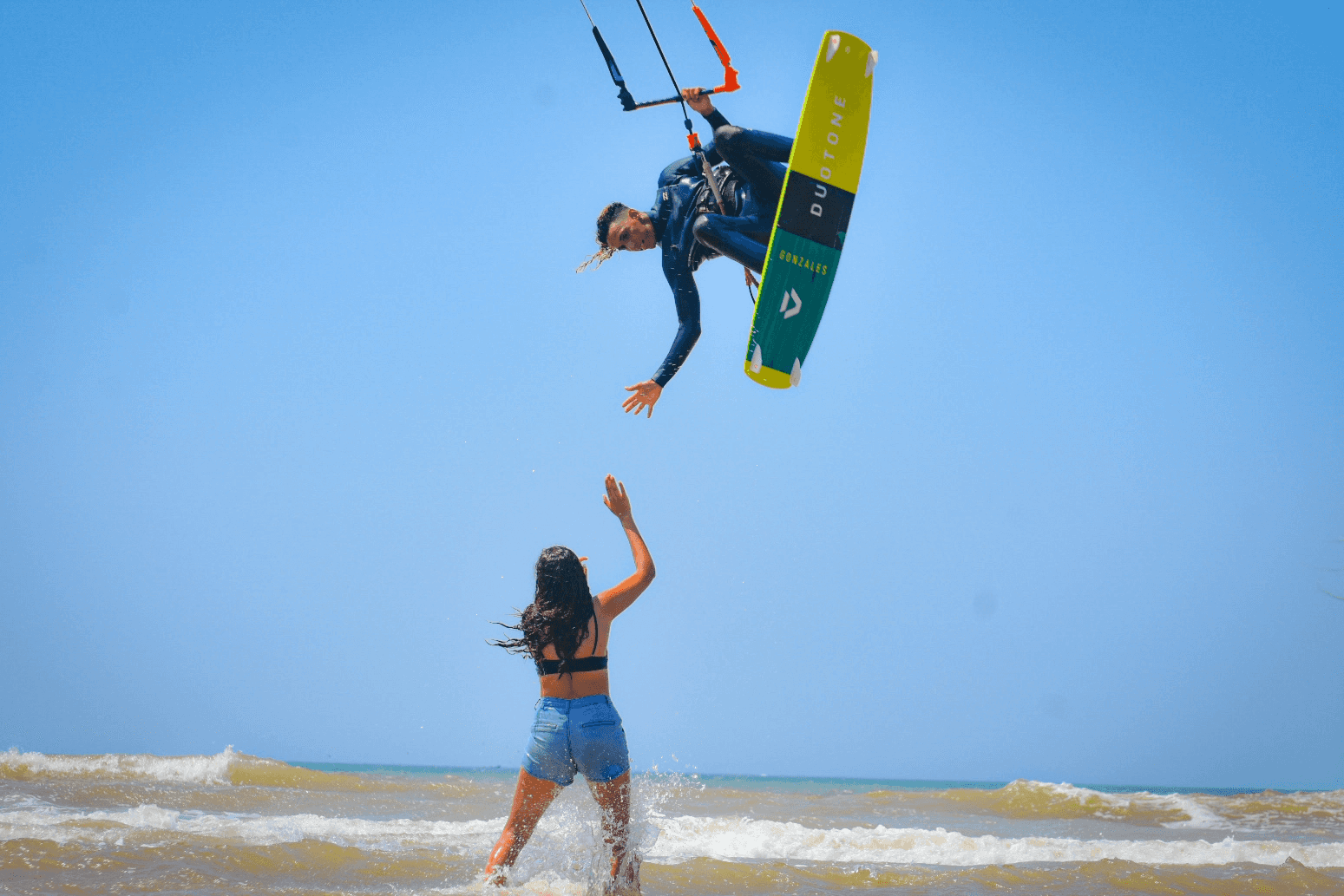
Essaouira did not earn the nickname Windy City by accident. The same geography that mellows morning surf swells creates one of Morocco's most reliable kitesurf arenas by afternoon. If you are planning kitesurf Essaouira — whether your first body-drag or your fiftieth downwind to Sidi Kaouki — understanding wind month by month saves ruined holidays, wrong kite sizes, and frustrated afternoons staring at whitecaps from a café. This Essaouira kitesurfing wind guide breaks down trade-wind patterns, seasonal averages, what kit to pack, and how locals pair surf mornings with kite afternoons. Use it alongside live forecasts (Windguru, Windy) and book lessons when you want an IKO coach to interpret the bay for your level.
Why Essaouira wind works for kitesurfing
Two engines drive Essaouira kitesurf: the North-East trade wind (Alizées) and local thermal effects over hot inland plains. Trades are most consistent April–October, accelerating as air heats and the pressure gradient tightens toward the Atlantic. The medina and port create a venturi feel near the beach — gusty near stone walls, cleaner a few hundred metres south on the main strip.
The bay offers shallow teaching zones at low tide and deeper water at high tide for advanced students. Downwinders toward Sidi Kaouki need coaching, safety boat or 4×4 support, and agreed exit points. Never treat a downwinder as a solo beginner milestone; it is an organised skill test with radios and rescue plans.
Harbour walls and the old ramp create gusty zones; schools move beginner drills south along the main beach where wind is steadier. If you hear horns and fishing activity near the port, stay clear — kites and lines do not mix with boats. Essaouira kitesurf culture is friendly but expects you to learn rules before claiming beach space.
How to read forecasts (Windguru & real beach feel)
Check Essaouira and Sidi Kaouki stations, not only Agadir. Look at wind direction (NE is classic), average speed, gust factor, and wave height if you surf the same trip. Under 12 knots, beginners on large training kites may struggle unless gear is huge; 18–25 knots is common summer afternoon territory for twin-tips.
Beach feel differs from airport weather: trees and buildings block early wind; by 14:00 the bay can jump 5 knots in ten minutes. Schools watch cloud lines over the argan hills — a dark line moving seaward often means the session you planned at 13:00 should start at 12:00 instead.
Write down three numbers each morning: average wind, gust, and direction. After a week in Essaouira you will predict kite size faster than apps — because you have felt how 18 knots with 24 knot gusts differs from steady 18. That skill transfers to every windy destination you visit later.
If forecasts disagree, trust the station closest to the beach and the coach on the sand. Apps smooth data over hours; your session happens in ten-minute bursts. Essaouira kitesurf rewards flexible timing more than rigid schedules.
Month-by-month wind guide (Essaouira)
January – March
Cooler air, variable wind days mixed with surf-focused mornings. Kite possible on windows but not peak season; bring thicker wetsuits. Great for surfers who kite occasionally.
April – May
Season ramps up; trades strengthen. Many schools open full kite schedules. Good balance for surf camp Morocco plus kite intro weeks.
June – August
Peak Windy City months. Afternoons reliably windy; book lessons early in the day for beginners. Crowds peak — reserve equipment storage and instructors in advance.
Expect 20+ knot afternoons multiple days per week. Schools run supervised kite launches; self-launch without skill annoys locals and risks accidents. Hydrate and wear sunglasses — glare off whitecaps is intense.
July and August are when kitesurf Essaouira search volume peaks — book IKO kitesurf Morocco packages two to four weeks ahead if you need specific instructors or twin-tip sizes. Mornings remain viable for surf lessons Essaouira before trades switch the bay to kite mode around midday.
September – October
Still strong wind with slightly milder heat. Favourite for progression camps: you can kite daily without summer holiday density on the water.
November – December
More swell for surfing, wind less predictable than summer but many rideable days. Ideal if you want kitesurf Essaouira on a mixed trip with bigger surf in the morning.
Kite sizes, wetsuits & what to bring
Typical quiver for a week in peak season: 7 m and 9 m for 70–80 kg riders, plus a 12 m for light days or heavier students. Lighter women and teens often live on 5–9 m range. Schools rent Duotone and North gear — confirm sizes when booking kitesurf lessons Essaouira.
Pack sunglasses, sunscreen, helmet (often provided), and booties if you walk rocky sections south of the bay. Bring passport copy for rentals, and consider travel insurance that covers kitesports. Storage at the school beats dragging wet kit through the medina alleys twice a day.
Beginners should budget for three to five days of lessons before independent rental — cheaper in the long run than broken gear and rescues. Intermediates travelling with own quiver should check airline kite policies; bar and lines count as hazardous on some carriers. Local shops sell spare lines and valves if you blow a bladder on a rock — rare in the bay but common on downwind beaches.
Wingfoil kiters share the same wind window: smaller wings in summer, larger in spring and autumn light days. Essaouira wingfoil schools store foils upright; do not lean boards on foil masts in gusts. If you ride both kite and wing, colour-code your bags — medina taxis are small and kit confusion at dawn is painful.
Gusty days, harbour wind & when to skip a session
Not every windy day is a kite day. Storm fronts, cross-shore gusts, and harbour turbulence can fool beginners into launching too big a kite. If sand stings your legs and gusts jump more than 8 knots in seconds, take a coaching downgrade or a theory day: line safety, weather, and kite tuning.
Harbour walls accelerate wind and create rotors — schools know the safe corridors; copy them, do not invent new launch spots for social media. If you are tired, dehydrated, or arguing with your partner about kite size, you are done for the day. Essaouira will be windy tomorrow.
Use the Beaufort scale like locals: when white horses cover the bay and you cannot walk upwind easily, beginners should not be in the water alone. Intermediates can ride but should stay within patrol zones. Advanced riders still respect fishing boats — this is a working port, not a kite park. When in doubt, ask your kite school Essaouira coach to name the safe corridor for the hour — that single tip prevents most avoidable incidents.
When surf is also on your trip, prioritise dawn surf on wind days and kite after 13:00. On rare glassy evenings, skip kite and enjoy the sunset from the ramp; your quiver will survive missing one ego session.
Essaouira wind vs Tarifa, Dakhla & European hubs
Tarifa delivers similar trade-wind physics with a busier scene and colder winter water — excellent if you want nightlife and maximum kite culture density. Essaouira wind competes on reliability April–October while adding UNESCO medina life and morning surf in the same trip. Parking and beach space feel less frantic than peak Tarifa August weekends.
Dakhla’s lagoons win for pure flat-water freestyle hours but require longer transfers and a desert-focused holiday. Essaouira suits travellers who want Marrakech access, mixed families (surf kids + kite parents), and restaurant variety after sessions. Zanzibar and other tropical destinations look exotic but often have narrower windy seasons — Essaouira’s cost per windy afternoon is hard to beat for Europeans.
For IKO kitesurf Morocco planning, treat Essaouira as a complete destination, not a windy add-on to a surf trip. Read this month-by-month guide, then book a skills check on day one so your kite size matches real beach gusts, not airport small talk.
Downwind to Sidi Kaouki & lesson planning
Organised downwinders are a highlight for intermediate+ kiters who control upwind body drag, self-rescue, and board start in chop. Routes depend on tide — coaches brief entry near Essaouira and exit beaches with rescue cover. Beginners should complete IKO levels in the bay before discussing downwind dreams.
Book kitesurf school Essaouira packages that state hours, radio support, and refund rules for no-wind days. Stack two sports smartly: surf 08:00–10:30, lunch, kite 13:00–16:00 when trades fill in. Your body needs rest days — plan at least one medina-only afternoon per week.
Advanced riders watch tide tables for launch corridors and keep a smaller kite ready when thermals spike. Beginners should not chase heroes on 7 m kites in gusty July — consistency beats ego. When in doubt, downsize and relaunch; the Windy City will supply another windy day tomorrow.
Ready to ride Essaouira with locals?
Book surf, kitesurf, or wingfoil lessons with IKO-certified coaches. Equipment included, small groups, and morning sessions when the bay is at its best.
Frequently asked questions
Best months for kitesurf Essaouira?
June–September windiest; April–May and October great for progression.
Summer wind strength?
Afternoons often 18–25 knots; beginners book coached sessions.
Can beginners learn here?
Yes in the bay with IKO instructors.
Essaouira vs Dakhla?
Dakhla for pure wind; Essaouira for culture + surf/kite combo.
Own kite needed?
No — schools provide lesson gear.