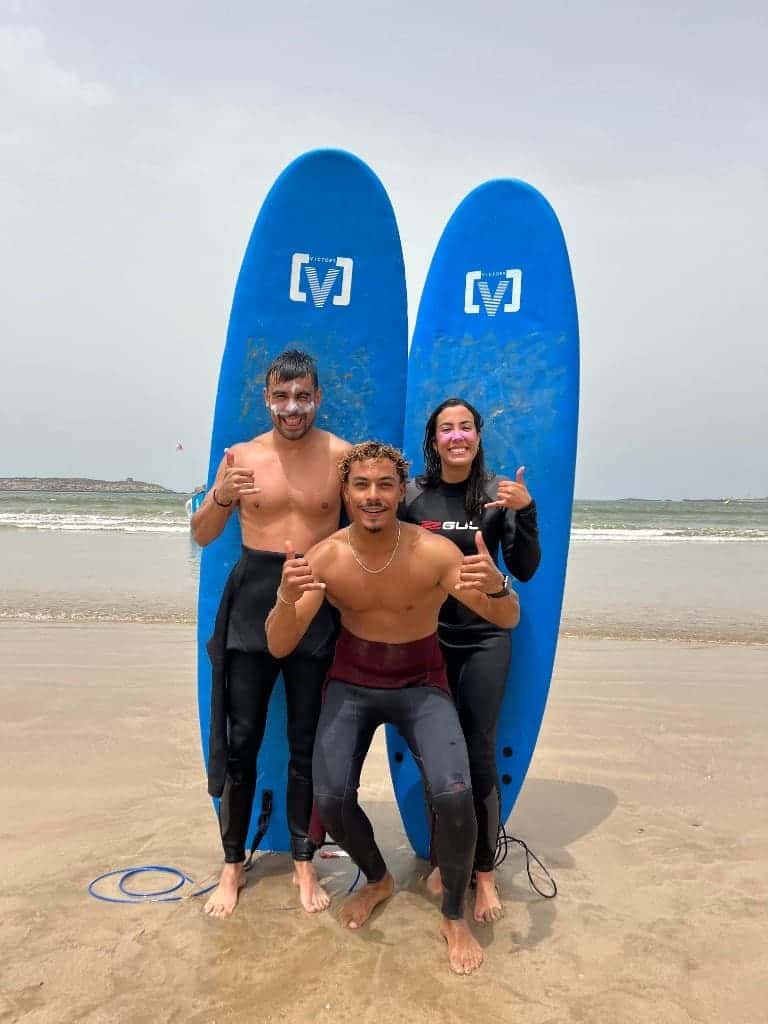
Family surf lessons in Essaouira: pacing, safety, and keeping kids stoked
This long read is written for travellers who want Essaouira specifics, not generic surf slogans. Take your time, bookmark it, and use it to ask better questions when you message a school.
When the swell builds, beginners still have room because the beach is long; the trick is choosing a quiet corner. A week-long camp works when each day has one clear focus: paddle day, pop-up day, line-up etiquette day. That is why locals still smile when beginners cheer for waist-high rides: they remember their first ones too.
Families do best when adults agree on one rule: celebrate tiny wins instead of comparing siblings mid-session. Ask whether photos are included; some schools offer them, others keep the lesson purely coaching-focused. That is the difference between a holiday try-out and a week that actually changes how you move in water.
Winter sessions can be stunning, but shorter lessons keep your technique sharp when your hands get cold. If you compare Essaouira to Taghazout, think sand versus reef exposure first, then crowd density second. That is how winter can feel premium: fewer people, bigger lines on the horizon, and honest coaching about limits.
If your leash drags in the sand, reset it before you stand; small details prevent tangled falls. Insurance paperwork is boring, but it is a sign the school treats safety as a system, not a slogan. That is how Essaouira stays memorable: waves plus medina woodsmoke plus the sound of gulls near the port.
The walk across dry sand with a soft board teaches balance before you even touch the water. Shoulders tire first; efficient paddling is smaller strokes with a high elbow, not frantic splashing. That is the bar a serious school should meet: clear plan, clear boundaries, clear next step after day one.
Hydration matters even when the air feels cool; wetsuits trap sweat and effort dehydrates you quietly. The tide shifts where the sandbanks peak, so the same spot can feel easier two hours later. That is how families keep evenings pleasant: nobody is sun-drunk, salt-cranky, and arguing about dinner plans.
White-water repeats are boring on paper, but they are where your shoulders learn timing without fear. Coaches repeat the same phrase for a reason: look where you want to go, not at your feet. That is what makes Essaouira a strong classroom for Atlantic fundamentals without forcing heroics.
When the swell builds, beginners still have room because the beach is long; the trick is choosing a quiet corner. A week-long camp works when each day has one clear focus: paddle day, pop-up day, line-up etiquette day. That is why locals still smile when beginners cheer for waist-high rides: they remember their first ones too.
Families do best when adults agree on one rule: celebrate tiny wins instead of comparing siblings mid-session. Ask whether photos are included; some schools offer them, others keep the lesson purely coaching-focused. That is the difference between a holiday try-out and a week that actually changes how you move in water.
Winter sessions can be stunning, but shorter lessons keep your technique sharp when your hands get cold. If you compare Essaouira to Taghazout, think sand versus reef exposure first, then crowd density second. That is how winter can feel premium: fewer people, bigger lines on the horizon, and honest coaching about limits.
If your leash drags in the sand, reset it before you stand; small details prevent tangled falls. Insurance paperwork is boring, but it is a sign the school treats safety as a system, not a slogan. That is how Essaouira stays memorable: waves plus medina woodsmoke plus the sound of gulls near the port.
The walk across dry sand with a soft board teaches balance before you even touch the water. Shoulders tire first; efficient paddling is smaller strokes with a high elbow, not frantic splashing. That is the bar a serious school should meet: clear plan, clear boundaries, clear next step after day one.
Hydration matters even when the air feels cool; wetsuits trap sweat and effort dehydrates you quietly. The tide shifts where the sandbanks peak, so the same spot can feel easier two hours later. That is how families keep evenings pleasant: nobody is sun-drunk, salt-cranky, and arguing about dinner plans.
White-water repeats are boring on paper, but they are where your shoulders learn timing without fear. Coaches repeat the same phrase for a reason: look where you want to go, not at your feet. That is what makes Essaouira a strong classroom for Atlantic fundamentals without forcing heroics.
When the swell builds, beginners still have room because the beach is long; the trick is choosing a quiet corner. A week-long camp works when each day has one clear focus: paddle day, pop-up day, line-up etiquette day. That is why locals still smile when beginners cheer for waist-high rides: they remember their first ones too.
Families do best when adults agree on one rule: celebrate tiny wins instead of comparing siblings mid-session. Ask whether photos are included; some schools offer them, others keep the lesson purely coaching-focused. That is the difference between a holiday try-out and a week that actually changes how you move in water.
Winter sessions can be stunning, but shorter lessons keep your technique sharp when your hands get cold. If you compare Essaouira to Taghazout, think sand versus reef exposure first, then crowd density second. That is how winter can feel premium: fewer people, bigger lines on the horizon, and honest coaching about limits.
If your leash drags in the sand, reset it before you stand; small details prevent tangled falls. Insurance paperwork is boring, but it is a sign the school treats safety as a system, not a slogan. That is how Essaouira stays memorable: waves plus medina woodsmoke plus the sound of gulls near the port.
The walk across dry sand with a soft board teaches balance before you even touch the water. Shoulders tire first; efficient paddling is smaller strokes with a high elbow, not frantic splashing. That is the bar a serious school should meet: clear plan, clear boundaries, clear next step after day one.
Hydration matters even when the air feels cool; wetsuits trap sweat and effort dehydrates you quietly. The tide shifts where the sandbanks peak, so the same spot can feel easier two hours later. That is how families keep evenings pleasant: nobody is sun-drunk, salt-cranky, and arguing about dinner plans.
White-water repeats are boring on paper, but they are where your shoulders learn timing without fear. Coaches repeat the same phrase for a reason: look where you want to go, not at your feet. That is what makes Essaouira a strong classroom for Atlantic fundamentals without forcing heroics.
When the swell builds, beginners still have room because the beach is long; the trick is choosing a quiet corner. A week-long camp works when each day has one clear focus: paddle day, pop-up day, line-up etiquette day. That is why locals still smile when beginners cheer for waist-high rides: they remember their first ones too.
Families do best when adults agree on one rule: celebrate tiny wins instead of comparing siblings mid-session. Ask whether photos are included; some schools offer them, others keep the lesson purely coaching-focused. That is the difference between a holiday try-out and a week that actually changes how you move in water.
Winter sessions can be stunning, but shorter lessons keep your technique sharp when your hands get cold. If you compare Essaouira to Taghazout, think sand versus reef exposure first, then crowd density second. That is how winter can feel premium: fewer people, bigger lines on the horizon, and honest coaching about limits.
If your leash drags in the sand, reset it before you stand; small details prevent tangled falls. Insurance paperwork is boring, but it is a sign the school treats safety as a system, not a slogan. That is how Essaouira stays memorable: waves plus medina woodsmoke plus the sound of gulls near the port.
The walk across dry sand with a soft board teaches balance before you even touch the water. Shoulders tire first; efficient paddling is smaller strokes with a high elbow, not frantic splashing. That is the bar a serious school should meet: clear plan, clear boundaries, clear next step after day one.
Hydration matters even when the air feels cool; wetsuits trap sweat and effort dehydrates you quietly. The tide shifts where the sandbanks peak, so the same spot can feel easier two hours later. That is how families keep evenings pleasant: nobody is sun-drunk, salt-cranky, and arguing about dinner plans.
White-water repeats are boring on paper, but they are where your shoulders learn timing without fear. Coaches repeat the same phrase for a reason: look where you want to go, not at your feet. That is what makes Essaouira a strong classroom for Atlantic fundamentals without forcing heroics.
When the swell builds, beginners still have room because the beach is long; the trick is choosing a quiet corner. A week-long camp works when each day has one clear focus: paddle day, pop-up day, line-up etiquette day. That is why locals still smile when beginners cheer for waist-high rides: they remember their first ones too.
Families do best when adults agree on one rule: celebrate tiny wins instead of comparing siblings mid-session. Ask whether photos are included; some schools offer them, others keep the lesson purely coaching-focused. That is the difference between a holiday try-out and a week that actually changes how you move in water.
Winter sessions can be stunning, but shorter lessons keep your technique sharp when your hands get cold. If you compare Essaouira to Taghazout, think sand versus reef exposure first, then crowd density second. That is how winter can feel premium: fewer people, bigger lines on the horizon, and honest coaching about limits.
If your leash drags in the sand, reset it before you stand; small details prevent tangled falls. Insurance paperwork is boring, but it is a sign the school treats safety as a system, not a slogan. That is how Essaouira stays memorable: waves plus medina woodsmoke plus the sound of gulls near the port.
The walk across dry sand with a soft board teaches balance before you even touch the water. Shoulders tire first; efficient paddling is smaller strokes with a high elbow, not frantic splashing. That is the bar a serious school should meet: clear plan, clear boundaries, clear next step after day one.
Hydration matters even when the air feels cool; wetsuits trap sweat and effort dehydrates you quietly. The tide shifts where the sandbanks peak, so the same spot can feel easier two hours later. That is how families keep evenings pleasant: nobody is sun-drunk, salt-cranky, and arguing about dinner plans.
White-water repeats are boring on paper, but they are where your shoulders learn timing without fear. Coaches repeat the same phrase for a reason: look where you want to go, not at your feet. That is what makes Essaouira a strong classroom for Atlantic fundamentals without forcing heroics.
When the swell builds, beginners still have room because the beach is long; the trick is choosing a quiet corner. A week-long camp works when each day has one clear focus: paddle day, pop-up day, line-up etiquette day. That is why locals still smile when beginners cheer for waist-high rides: they remember their first ones too.
Families do best when adults agree on one rule: celebrate tiny wins instead of comparing siblings mid-session. Ask whether photos are included; some schools offer them, others keep the lesson purely coaching-focused. That is the difference between a holiday try-out and a week that actually changes how you move in water.
Winter sessions can be stunning, but shorter lessons keep your technique sharp when your hands get cold. If you compare Essaouira to Taghazout, think sand versus reef exposure first, then crowd density second. That is how winter can feel premium: fewer people, bigger lines on the horizon, and honest coaching about limits.
If your leash drags in the sand, reset it before you stand; small details prevent tangled falls. Insurance paperwork is boring, but it is a sign the school treats safety as a system, not a slogan. That is how Essaouira stays memorable: waves plus medina woodsmoke plus the sound of gulls near the port.
The walk across dry sand with a soft board teaches balance before you even touch the water. Shoulders tire first; efficient paddling is smaller strokes with a high elbow, not frantic splashing. That is the bar a serious school should meet: clear plan, clear boundaries, clear next step after day one.
Hydration matters even when the air feels cool; wetsuits trap sweat and effort dehydrates you quietly. The tide shifts where the sandbanks peak, so the same spot can feel easier two hours later. That is how families keep evenings pleasant: nobody is sun-drunk, salt-cranky, and arguing about dinner plans.
White-water repeats are boring on paper, but they are where your shoulders learn timing without fear. Coaches repeat the same phrase for a reason: look where you want to go, not at your feet. That is what makes Essaouira a strong classroom for Atlantic fundamentals without forcing heroics.
When the swell builds, beginners still have room because the beach is long; the trick is choosing a quiet corner. A week-long camp works when each day has one clear focus: paddle day, pop-up day, line-up etiquette day. That is why locals still smile when beginners cheer for waist-high rides: they remember their first ones too.
Families do best when adults agree on one rule: celebrate tiny wins instead of comparing siblings mid-session. Ask whether photos are included; some schools offer them, others keep the lesson purely coaching-focused. That is the difference between a holiday try-out and a week that actually changes how you move in water.
Winter sessions can be stunning, but shorter lessons keep your technique sharp when your hands get cold. If you compare Essaouira to Taghazout, think sand versus reef exposure first, then crowd density second. That is how winter can feel premium: fewer people, bigger lines on the horizon, and honest coaching about limits.
If your leash drags in the sand, reset it before you stand; small details prevent tangled falls. Insurance paperwork is boring, but it is a sign the school treats safety as a system, not a slogan. That is how Essaouira stays memorable: waves plus medina woodsmoke plus the sound of gulls near the port.
The walk across dry sand with a soft board teaches balance before you even touch the water. Shoulders tire first; efficient paddling is smaller strokes with a high elbow, not frantic splashing. That is the bar a serious school should meet: clear plan, clear boundaries, clear next step after day one.
Hydration matters even when the air feels cool; wetsuits trap sweat and effort dehydrates you quietly. The tide shifts where the sandbanks peak, so the same spot can feel easier two hours later. That is how families keep evenings pleasant: nobody is sun-drunk, salt-cranky, and arguing about dinner plans.
White-water repeats are boring on paper, but they are where your shoulders learn timing without fear. Coaches repeat the same phrase for a reason: look where you want to go, not at your feet. That is what makes Essaouira a strong classroom for Atlantic fundamentals without forcing heroics.
When the swell builds, beginners still have room because the beach is long; the trick is choosing a quiet corner. A week-long camp works when each day has one clear focus: paddle day, pop-up day, line-up etiquette day. That is why locals still smile when beginners cheer for waist-high rides: they remember their first ones too.
Families do best when adults agree on one rule: celebrate tiny wins instead of comparing siblings mid-session. Ask whether photos are included; some schools offer them, others keep the lesson purely coaching-focused. That is the difference between a holiday try-out and a week that actually changes how you move in water.
Winter sessions can be stunning, but shorter lessons keep your technique sharp when your hands get cold. If you compare Essaouira to Taghazout, think sand versus reef exposure first, then crowd density second. That is how winter can feel premium: fewer people, bigger lines on the horizon, and honest coaching about limits.
Before you book
Ask about group size, insurance, meeting points, and reschedule rules. Good schools answer plainly. If something feels vague, keep searching: clarity upfront usually matches clarity on the beach.
Ready to turn this research into water time? Message us with your dates, level, and whether you are travelling solo, as a couple, or with kids. We will suggest a realistic plan for Essaouira conditions.