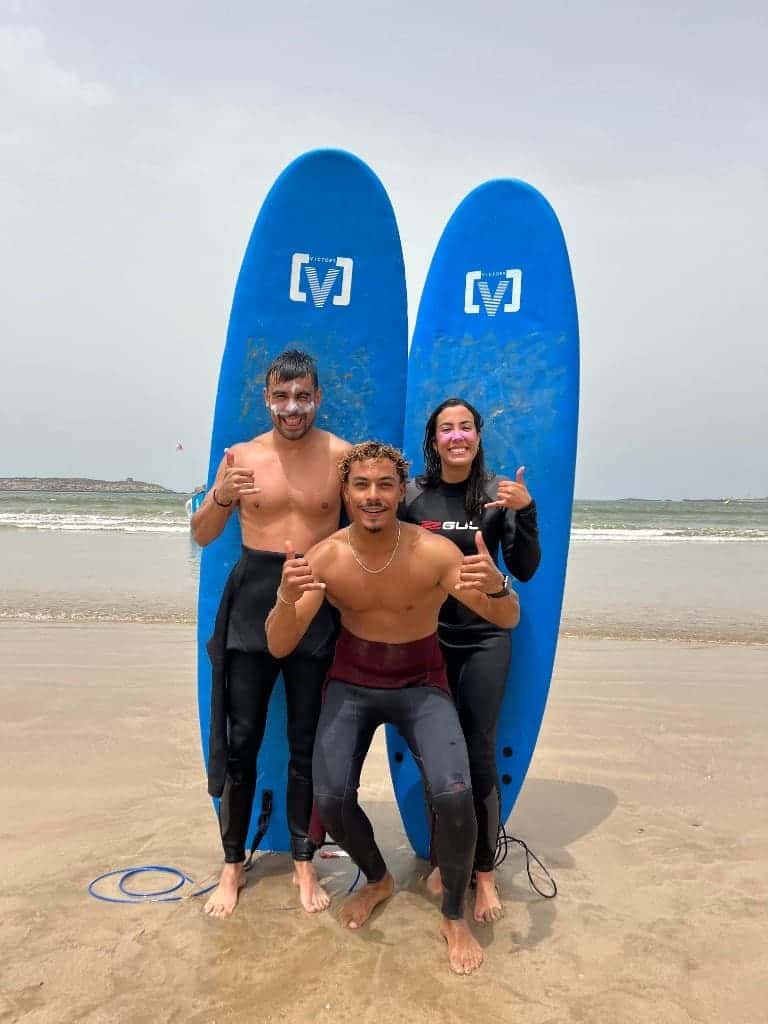
Learning to surf in Essaouira is one of the smartest first trips you can take in Morocco. The bay is sand-bottomed, the culture is welcoming, and the town is built for travellers who want more than a single sport — you can surf at sunrise, explore the medina at lunch, and try kitesurf or wingfoil when the wind turns on. This complete beginner's surf guide to Essaouira covers what to expect before you fly, how lessons are structured, what gear schools provide, and how to progress from whitewater to your first green waves without burning out your shoulders or your holiday budget. If you have never stood on a board, or you tried once years ago and want a proper restart, read this guide then book a coached session so every hour in the water counts.
Why Essaouira is ideal for first-time surfers
Three factors make Essaouira surf beginner-friendly: geometry, sand, and coaching density. The crescent bay slows swell energy compared to open reef coasts, so whitewater rollers are predictable. You are not dodging rocks on your first day, and instructors can stand in shallow water for push-ins when needed. Culturally, the town is used to international guests — English, French, and Spanish are common in schools, menus are clear, and accommodation ranges from riads to hostels five minutes from the beach.
Compared with Taghazout’s reef breaks, Essaouira forgives mistakes. Compared with winter Europe, Morocco offers more sunny sessions per week in shoulder seasons. The trade-off is wind: afternoons can be blown out for surfing, which is why locals and good surf school Essaouira schedules prioritise 08:00–11:00 lessons. Plan your trip around mornings in the water, not around sleeping in and expecting glassy afternoons every day.
Accommodation is easy: riads inside the medina for atmosphere, or guesthouses south of the ramp for quicker beach walks. Budget travellers find hostels year-round; families book apartments with kitchens to manage food allergies and early breakfasts before lessons. None of that changes the surf advice: sleep early, surf early, nap after lunch when the wind rises.
What your first week looks like (realistic timeline)
Day 1–2: Beach briefing, safety, leash rules, and whitewater take-offs. You learn to carry the board, paddle without banana-back posture, and pop up in the foam with coach feedback. Most students stand multiple times in session one if fitness is average.
Day 3–4: Paddling efficiency, turning in whitewater, and optional first steps toward the line-up on tiny days. Coaches introduce rip awareness and how to fall flat to protect your head.
Day 5–7: If swell stays small, you may catch broken green waves in the bay or repeat power drills in whitewater to lock muscle memory. Progress is not linear — wind or flat spells mean technique days still count.
Families often split: one parent with kids in soft-top groups, another in semi-private coaching. Solo travellers frequently join mixed groups and meet trip buddies for medina dinners. A week-long surf camp Morocco package should state clearly how many hours are in-water versus transport or rest — ask before you pay.
Fitness helps but is not the gatekeeper. We see strong gym athletes struggle because they rush the pop-up, and we see cautious hikers succeed because they listen. Tell your coach about shoulder injuries, ear surgery, or contact lenses — small disclosures change how we handle wipeouts and board control drills.
Equipment, wetsuits & safety basics
Reputable Essaouira surf lessons include board, wetsuit, and leash. Beginners use soft-tops from 8'0" to 9'0" depending on height and weight. Coaches adjust volume so you catch waves without cheating on paddle technique. Bring swimwear, sunscreen, and a reusable water bottle; schools provide zinc and sometimes hoods in winter.
Safety non-negotiables: never ditch your board toward others, stay inside lesson flags, and signal if you feel dizzy or cold. Morocco’s sun is strong even when air feels cool — dehydration looks like “I suddenly can’t pop up.” Winter surfers use 3/2 or 4/3 suits; summer may be 2 mm shorty or rash vest only on hottest weeks.
If you wear glasses, use a strap; contact lenses are fine but bring spare sets. Reef boots are not needed in the main bay but pack them if you plan an Imsouane day trip later in the week.
Lessons vs rental — what beginners should choose
Renting a hard board without coaching is the fastest way to hurt yourself or others in Essaouira. Soft-top rental for experienced surfers sometimes exists in peak season, but beginners should book lessons until they can paddle out, catch unbroken waves, and kick out safely. Semi-private and private surf lessons Essaouira accelerate feedback; group lessons are best value for social travellers.
Ask what is included: transport to alternate peaks, photos, insurance, and storage between days. Compare Essaouira surf school options by instructor ratio (4–6 students per coach is healthy), certification (IKO or federation alignment), and cancellation policy when swell is flat — professional schools reschedule or refund fairly.
Private surf lessons Essaouira suit anxious learners, older guests, or anyone who wants rapid video feedback. Group lessons suit social travellers and budget-conscious trips. Semi-private splits the difference — pairs or trios sharing a coach. None of these are “better”; they match personality and how fast you want to move from whitewater to green waves.
If you already tried surf once years ago, tell the school — you may skip the longest land briefing and spend more time in water, but coaches will still check your paddle and fall technique. Honesty beats bravado when Atlantic swell arrives on day three.
Flights, visas & medina life between sessions
Most visitors fly to Marrakech Menara (RAK) or Agadir Al Massira (AGA). Marrakech is roughly three hours by road; Agadir about two and a half. Book a private transfer or shared shuttle if you do not drive — night arrivals are easier with a pre-booked driver who knows the medina gates. Essaouira surf trips do not require a car if you stay near the beach; day trips to Sidi Kaouki use taxis.
Morocco allows many nationalities visa-free for 90 days; check your passport rules before booking non-refundable camps. Currency is Moroccan dirham; cards work in riads and restaurants but keep cash for small cafés and tips. SIM cards at the airport save you forecast apps and WhatsApp with your surf school Essaouira coach.
Between lessons, the medina sells spices, thuya wood crafts, and fresh fish at the port. Schedule at least one slow evening: mint tea on a rooftop beats another sunburned hour on a bar screen. Your surf fitness improves when you sleep and eat well — tagines, grilled sardines, and oranges are recovery food.
Pack light but smart: reef-safe sunscreen, a hat that stays on in wind, sandals for hot sand, and a dry bag for wetsuits. Leave space for a hoodie; Atlantic evenings cool down even in summer. If you bring your own board, airline sports fees vary — sometimes renting locally is cheaper for a week.
Booking checklist before you fly to Essaouira
Start with dates that match your goal: pure learn to surf Essaouira weeks work best in shoulder seasons (March–May or September–November) when swell is moderate and mornings stay glassy longer. Summer is brilliant for sun and culture but flatter for surf — still fine for first pop-ups, just set expectations. Winter brings more Atlantic energy; beginners can progress fast with a wetsuit and a coach who shortens sessions before fatigue causes bad falls.
When comparing surf school Essaouira offers, ask four questions: how many students per instructor, whether equipment and insurance are included, what happens on flat or storm days, and whether storage is available if you stay a week. Cheapest is not always best value — an extra hour with a certified coach often saves you from repeating the same mistake for three days alone.
Book at least one lesson for your first morning in town, even if you are athletic. Essaouira’s wind and harbour currents are not obvious from a hostel terrace. After two coached sessions, you can decide whether to add Sidi Kaouki day trips, a surf camp Morocco package, or afternoon kitesurf discovery while trades fill in.
Beyond day one: medina, wind sports & next steps
Essaouira rewards balanced pacing. Surf three to four mornings, rest one afternoon, and explore the medina, port, and Gnawa music scene. If wind rises, try a kitesurf discovery or wingfoil intro — many students discover their “main sport” only after trying both on the same coastline.
When you leave Essaouira, you should have: a clear pop-up habit, respect for rips, and a plan for the next trip (maybe Sidi Kaouki for a guided day or Imsouane for longboard lines). Stay in touch with your coach for video review; progression continues on flat days at home with skateboard balance drills and swim fitness.
Finally, tip your coach and repair guys if they went extra — Morocco’s surf economy runs on fair wages and gear maintenance. You are not buying a theme park ride; you are joining a community that wants you back next year, better prepared and still humble about the ocean.
Ready to ride Essaouira with locals?
Book surf, kitesurf, or wingfoil lessons with IKO-certified coaches. Equipment included, small groups, and morning sessions when the bay is at its best.
Frequently asked questions
Can I learn to surf Essaouira with zero experience?
Yes — book beginner surf lessons with equipment included.
How many lessons before surfing alone?
Several coached sessions minimum; schools advise when you are ready.
Best month for beginners?
Autumn and spring balance swell and wind; summer is flatter but sunny.
Family lessons available?
Yes — child-friendly pacing and soft-tops for kids.
Week budget?
Compare packages by hours in water; contact us for current rates.